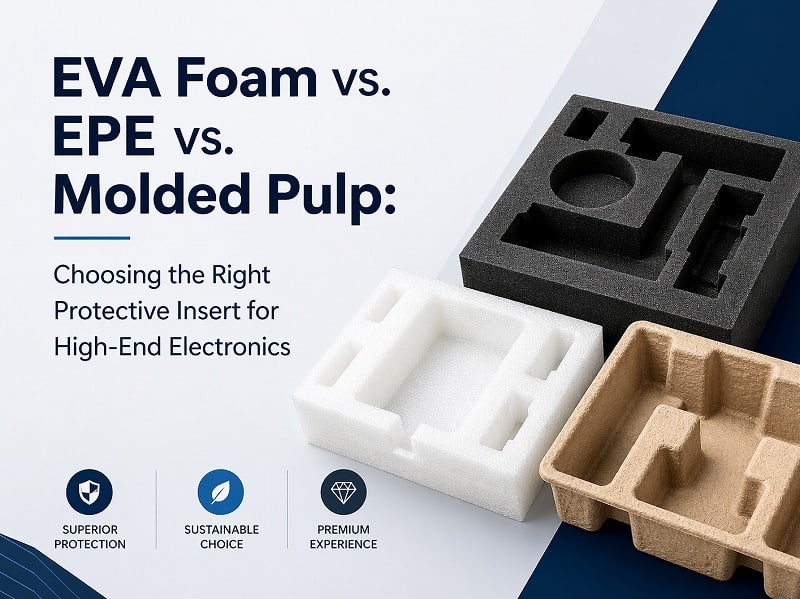
A professional guide to selecting high-performance protective packaging for premium devices.
Table of Contents
- Why Protective Inserts Matter for High-End Electronics
- Overview of EVA Foam, EPE Foam, and Molded Pulp
- Quick Comparison: EVA Foam vs. EPE vs. Molded Pulp
- Performance, Cost, and Sustainability Differences
- Best Material by Application Scenario
- How to Choose the Right Insert for Your Product
- Why Work with DHP Factory
1. Why Protective Inserts Matter for High-End Electronics
For premium electronics, packaging is an extension of the brand experience. High-value devices like smart hardware or medical instruments require inserts that offer exceptional shock absorption, surface protection, and structural stability during transit. Selecting the wrong material can lead to compression failure or cosmetic damage, significantly impacting brand reputation.

2. Overview of EVA Foam, EPE Foam, and Molded Pulp
EVA Foam
EVA (Ethylene Vinyl Acetate) is a high-density, closed-cell foam known for its durability. In the EVA foam vs EPE debate, EVA stands out for its rebound performance and premium tactile feel, making it the top choice for luxury packaging.

EPE Foam
EPE (Expanded Polyethylene) is a lightweight, flexible cushioning material. While it offers good moisture resistance and shock absorption for general electronics, it is more prone to compression over time compared to EVA.

Molded Pulp
Molded pulp is a sustainable choice made from recycled fibers. It provides stable structural support and is increasingly popular for brands prioritizing environmental compliance and export regulations.

3. Quick Comparison: EVA Foam vs. EPE vs. Molded Pulp
To help you decide between EVA foam vs EPE or sustainable pulp, we’ve summarized their core positioning below:
4. Performance, Cost, and Sustainability Differences
- Shock Absorption: EVA offers the highest resilience; EPE provides flexible, budget-friendly cushioning.
- Durability: EVA maintains its shape after repeated impacts, whereas EPE is typically for single-use transit.
- Sustainability: Molded pulp leads the way as a biodegradable and recyclable option.
5. Best Material by Application Scenario
Different products require tailored solutions:
- Luxury electronics: EVA foam is preferred for its precision-cut edges and high-end aesthetics.
- Mass-market E-commerce: EPE foam balances cost and protection for high-volume shipping.
- Eco-conscious brands: Molded pulp aligns perfectly with green marketing and plastic-free initiatives.
6. How to Choose the Right Insert for Your Product
Consider your product's value, shipping distance, and surface sensitivity. Scratch-prone items benefit most from the soft-touch finish of high-quality EVA inserts. For international logistics, materials with high recovery rates like EVA are often worth the investment.

7. Why Work with DHP Factory
At DHP Factory, we specialize in high-end packaging engineering. Whether you need precision CNC-cut EVA or eco-friendly molded pulp, we provide optimized solutions that elevate your brand.
For more information on the eco-friendliness of the box, you can also click here to learn about our 100% plastic-free book-style box solution.
© 2026 DHP Factory. All rights reserved. Professional packaging solutions for global brands.