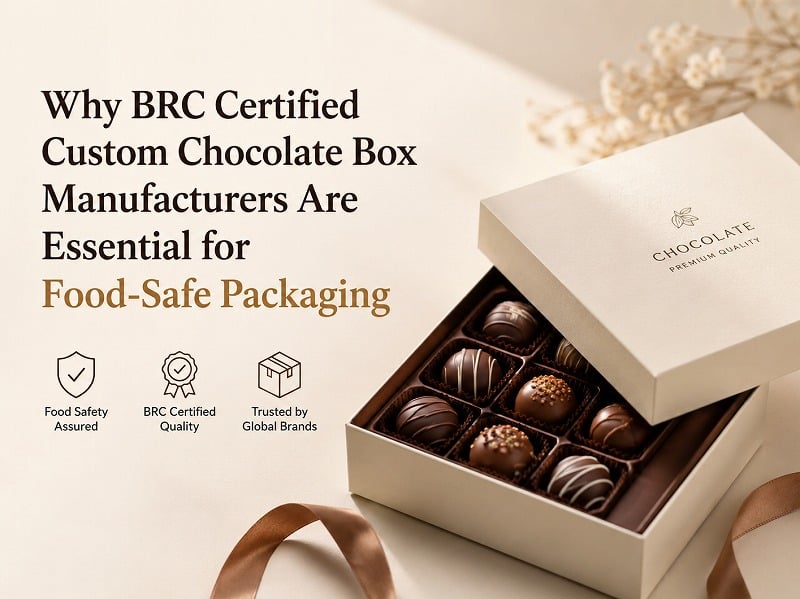
Think packaging is just about aesthetics? Think again. In the global chocolate trade, your box is a critical safeguard for food safety. Because chocolate is uniquely vulnerable to environmental shifts and contamination, your packaging supplier is the most important link in your supply chain. Choose wisely—your brand’s reputation and regulatory standing depend on it.
Table of Contents
- 1. The Real Risk Behind Custom Chocolate Box
- 2. What BRC Certification Means in Packaging
- 3. Direct vs Indirect Chocolate Packaging Explained
- 4. How BRC Standards Ensure Food Safety
- 5. Why Global Buyers Prefer BRC Certified Manufacturers
- 6. Why Choose a Trusted Manufacturer Like DHP Factory
- 7. Conclusion
1. The Real Risk Behind Custom Chocolate Box
Chocolate is a highly sensitive food product. Improper packaging can lead to contamination, odor migration, or even chemical transfer. According to global food safety frameworks, packaging materials that come into contact with food must be strictly controlled through hygiene systems and risk analysis procedures.
This is where many buyers underestimate risk: packaging is part of the food safety chain, not separate from it.

2. What BRC Certification Means in Packaging
The BRCGS (Brand Reputation Compliance Global Standards) certification is one of the most recognized global benchmarks for food safety and packaging compliance. It provides a structured system to ensure that packaging manufacturers consistently deliver safe, legal, and high-quality materials
Unlike basic quality certifications, BRC requires:
- HACCP-based risk management systems
- Strict hygiene and environmental controls
- Traceability and process monitoring
- Regular third-party audits
It is widely adopted across over 130 countries and is often required by international retailers and food brands
3. Direct vs Indirect Chocolate Packaging Explained
Understanding packaging structure is essential for buyers sourcing custom chocolate packaging box solutions:
- Indirect Packaging: Chocolate is first wrapped in aluminum foil or plastic film, then placed into a paper box. In this case, the outer box does not directly contact the product and has lower safety requirements.
- Direct Packaging: Chocolate is placed directly into the box with only greaseproof or butter paper separation. This type requires a dust-free production environment and strict hygiene controls.
At this level, packaging is no longer “just a box”—it becomes part of the food contact system. That’s why BRC certification is critical.

4. How BRC Standards Ensure Food Safety
BRC certification enforces a comprehensive framework covering every stage of production. It requires manufacturers to implement hazard analysis systems and maintain controlled environments, ensuring that packaging materials remain safe throughout the process
Key safety mechanisms include:
- Raw Material Control: Only verified food-grade materials are used
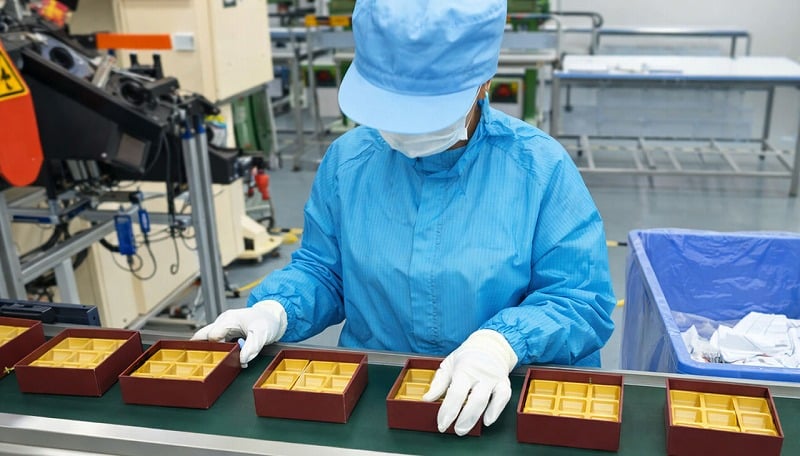
- Clean Production Zones: Especially critical for direct-contact packaging
- Personnel Hygiene Management: Staff training and sanitation protocols
- Continuous Monitoring: Environmental and microbiological testing
These systems ensure that packaging does not introduce contamination risks into the final food product.
5. Why Global Buyers Prefer BRC Certified Manufacturers
From a procurement perspective, BRC certification simplifies supplier evaluation. It provides a unified standard that reduces the need for repeated audits while ensuring compliance with international regulations
Key advantages include:
- Faster supplier approval for global brands
- Compliance with EU and US food safety regulations
- Reduced risk of product recalls
- Improved supply chain transparency
In many cases, certification is not optional—it is a requirement for entering high-end retail markets.
6. Why Choose a Trusted Manufacturer Like DHP Factory
At DHP Factory (www.dhpboxes.com), food safety is treated as a production standard—not a marketing claim.
We specialize in manufacturing custom chocolate packaging box solutions tailored for both indirect and direct food contact applications. For direct packaging, our facilities operate under strict dust-free conditions, ensuring that every box meets high hygiene requirements.
Our approach aligns with global compliance expectations:
- Controlled production environments for food-contact packaging
- Strict supplier material verification processes
- Experience serving international confectionery brands
👉 Explore more about our capabilities: Custom Packaging Solutions
👉 Learn about our production standards: Our Factory
7. Conclusion
In today’s global market, packaging safety is inseparable from product safety. Whether you are sourcing for retail, export, or private label chocolate products, working with a BRC-certified manufacturer ensures compliance, reduces risk, and strengthens your brand credibility.
For businesses looking to scale internationally, choosing the right packaging partner is not just a technical decision—it is a strategic one.